Best Emotional Support Animals for South Carolina Apartments — A Clinician-Vetted Lineup
Choosing the right emotional support animal for your South Carolina apartment is a decision that sits at the intersection of therapeutic need, practical living conditions, and federal housing law. Under the Fair Housing Act — and guided by HUD's authoritative notice FHEO-2020-01, Assessing a Person's Request to Have an Animal as a Reasonable Accommodation Under the Fair Housing Act — a landlord or property manager is generally required to grant a reasonable accommodation to a tenant whose licensed mental health professional (LMHP) has determined that an emotional support animal is therapeutically appropriate for a diagnosed disability-related need. That protection applies across South Carolina, whether you're renting a studio in downtown Charleston, a garden apartment in Greenville, or a high-rise unit in Columbia.
But here's what the internet rarely tells you: not every animal is an equally practical choice inside four walls. The animal that provides the deepest emotional benefit is the one whose temperament, noise level, space requirements, and care demands align with your living situation — and with the therapeutic goals your clinician has documented. This clinician-vetted lineup explores the animals most frequently observed to thrive in apartment environments across South Carolina, offering practical guidance for anyone exploring whether an ESA might be right for them.
A brief but important note before we begin: the information below is informational only and does not constitute medical, mental-health, or legal advice. Whether an ESA is therapeutically appropriate for you is a determination only a South Carolina-licensed mental health professional can make after a proper clinical evaluation. For housing disputes, please consult a South Carolina-licensed attorney or your local legal aid office for FHA enforcement guidance.
How ESA Housing Protections Work in South Carolina Apartments
Before diving into the lineup, a quick orientation to the legal framework is worthwhile. HUD's FHEO-2020-01 notice establishes that housing providers — including those with no-pet policies — must engage in an interactive process when a resident or applicant presents a valid ESA letter from a licensed mental health professional. The letter must come from an LMHP who is licensed in South Carolina and who has evaluated the individual and determined that an emotional support animal may provide therapeutic benefit related to a mental or emotional disability. A legitimate ESA letter is not a certificate, a registration card, or an entry in an online database; none of those carry legal weight, and HUD has explicitly flagged online ESA registries as unreliable.
South Carolina does not currently impose an additional state-level waiting period between clinician and client before an ESA letter may be issued — unlike states such as California (AB-468) or Montana (HB-703), which mandate a minimum 30-day established therapeutic relationship. That said, a South Carolina-licensed clinician at ESA Letter South Carolina will still conduct a thorough, individualized clinical evaluation; legitimate licensure requires it. The result, when clinically appropriate, is a properly formatted ESA letter that your housing provider can verify as compliant with both state professional-licensing standards and the federal Fair Housing Act framework.
The Clinician-Vetted Lineup: Best ESAs for South Carolina Apartments
-
1. Dogs — The Adaptive, Bond-Driven Classic
Dogs remain the most commonly documented emotional support animals in housing accommodation requests nationwide, and for sound therapeutic reasons. The human-canine bond activates measurable neurochemical responses — reduced cortisol, increased oxytocin — that many people with anxiety disorders, PTSD, major depressive disorder, and other qualifying conditions may find meaningfully beneficial. In a South Carolina apartment context, the key variables are breed temperament, adult size, and noise profile. A Cavalier King Charles Spaniel, a French Bulldog, or a well-socialized Greyhound (renowned for their surprisingly low indoor energy) can adapt remarkably well to apartment living without the space demands of a working-breed dog.
South Carolina's coastal humidity and summer heat are also worth factoring into breed selection. Brachycephalic breeds — Bulldogs, Pugs, Boston Terriers — may require climate-controlled environments and are generally calmer indoors, making them reasonable apartment companions, though their veterinary needs can be higher. Mixed-breed dogs of calm disposition frequently perform just as well therapeutically as any purebred animal, and shelter adoption aligns with South Carolina's robust rescue community. Regardless of breed, basic manners training is a practical necessity; an ESA is not legally required to be task-trained like a service dog, but a dog that is house-trained and non-destructive strengthens your accommodation request and your relationship with your housing provider.
The FHA does not permit a landlord to impose breed restrictions or weight limits on an ESA without individualized assessment, though they may deny an accommodation if the specific animal poses a direct threat to health or safety. Understanding that nuance — and having it documented by your LMHP — matters. Explore our clinician-reviewed guide to the best ESA dog breeds for South Carolina apartments for a deeper breed-by-breed breakdown.
Practical Takeaway: Choose a dog whose adult temperament and energy level match your actual square footage and daily routine. Prioritize socialization and basic manners training from day one, and keep your ESA letter current and issued by a South Carolina-licensed clinician.
-
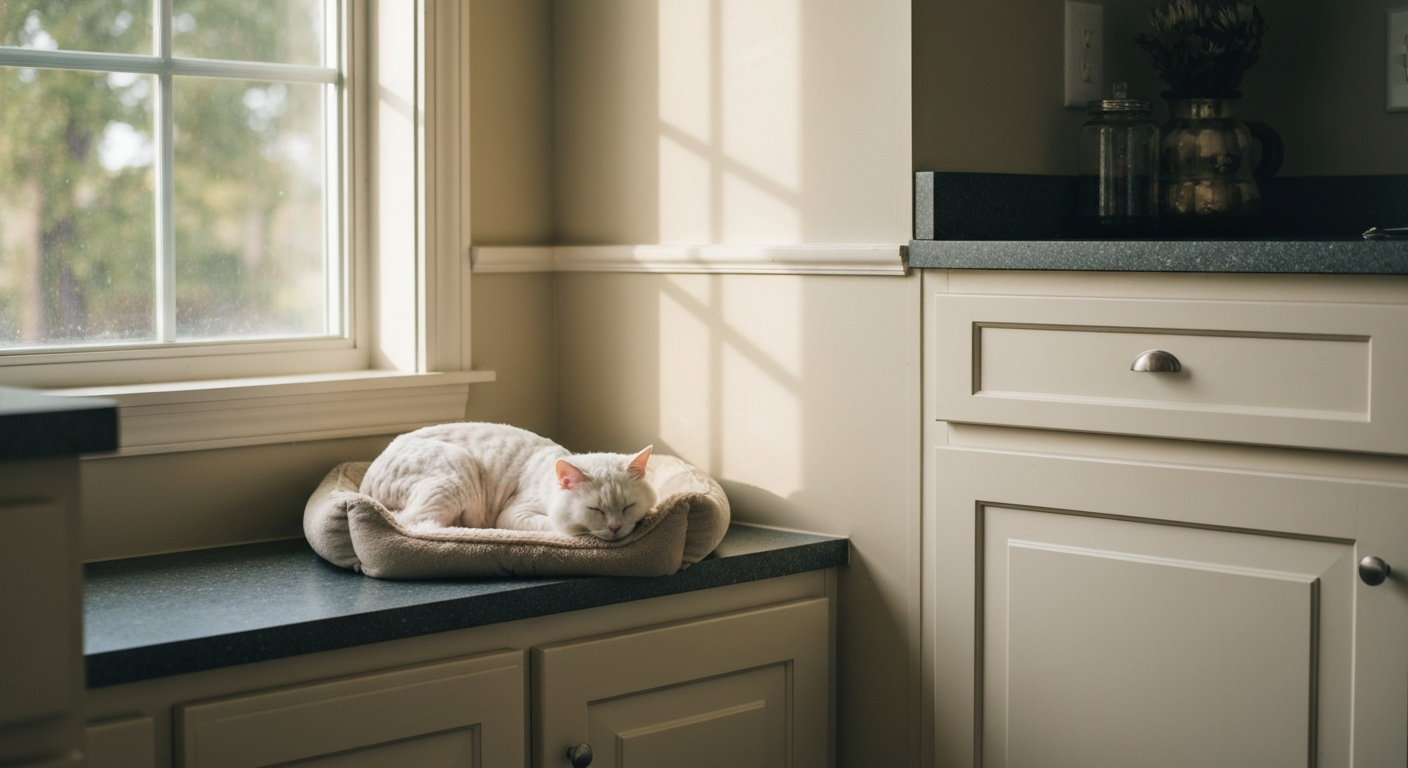
2. Cats — Quiet, Low-Maintenance Emotional Anchors
For many South Carolina renters, cats represent the single most practical apartment-friendly ESA — and the therapeutic case for them is well-established. The repetitive, rhythmic sensation of a cat's purr has been associated with reduced physiological stress markers in multiple observational studies, and the predictable routine of cat care (feeding, grooming, play) can provide meaningful structure for individuals managing depression, bipolar disorder, or generalized anxiety. Cats require no outdoor walks, produce relatively low noise, and are generally self-sufficient during working hours — attributes that make them ideally suited to the rhythms of apartment life in South Carolina's urban centers.
From a housing-law perspective, cats are perhaps the least contentious ESA choice. They occupy minimal space, pose no realistic threat to other residents, and their presence is unlikely to generate neighbor complaints that a landlord could use to argue a direct-threat exception under FHA. Breeds such as the Ragdoll, Scottish Fold, and American Shorthair tend toward gentle, low-aggression temperaments, though individual personality varies considerably — rescue cats can be equally well-matched to a person's therapeutic needs. South Carolina has a robust network of humane societies and feline rescue organizations, particularly in the Upstate and Lowcountry regions, making adoption both accessible and affordable.
It's worth noting that a landlord may still request documentation of vaccination and basic care standards, and maintaining those records proactively demonstrates responsibility and strengthens your accommodation standing. Your South Carolina-licensed LMHP's ESA letter, combined with a well-cared-for animal, forms the strongest possible foundation for an uncontested accommodation request. Read our full guide to ESA cats as quiet companions for South Carolina renters.
Practical Takeaway: Cats are among the most apartment-compatible ESAs available. Prioritize a temperament evaluation when selecting your cat, keep veterinary records current, and pair your animal with a valid ESA letter from a licensed South Carolina clinician.
-
3. Rabbits — Gentle, Silent, and Surprisingly Therapeutic
Rabbits occupy a uniquely advantageous niche in the apartment ESA landscape. They are nearly silent, litter-trainable, and their gentle, deliberate movements and soft textures have been documented in therapeutic contexts — including formal animal-assisted therapy programs — as effective tools for grounding exercises and sensory regulation. For individuals managing panic disorder, OCD-spectrum conditions, or emotional dysregulation, the tactile experience of holding or interacting with a calm rabbit can interrupt rumination cycles in ways that clinicians may find therapeutically relevant to document.
In a South Carolina apartment, rabbits thrive when given a sufficiently sized enclosure, daily free-roaming time in a rabbit-proofed area, and a consistent diet of hay, leafy greens, and fresh water. They are sensitive to heat — South Carolina's summer temperatures demand that their living space remain climate-controlled, ideally below 75°F — and they require annual veterinary care from a rabbit-savvy exotic animal practitioner, several of whom practice in Columbia, Charleston, and Greenville. The important caveat is that rabbits are not beginner pets; their dietary and environmental needs are specific, and a commitment to proper husbandry is essential both for the animal's welfare and for maintaining a clean, well-managed accommodation that your landlord cannot reasonably object to.
From a Fair Housing Act perspective, rabbits are explicitly recognized as animals that may serve as ESAs; HUD's FHEO-2020-01 notice makes no restriction to dogs and cats. Your ESA letter from a South Carolina LMHP should document the therapeutic relationship between you and the animal specifically, rather than referring to a generic animal type. Learn more about rabbits as emotional support animals in South Carolina, including habitat setup and veterinary resources.
Practical Takeaway: Rabbits are a compelling apartment ESA for the right individual — silent, bonding-capable, and therapeutically grounded. Research proper husbandry carefully and confirm that your South Carolina clinician documents the specific animal's therapeutic role in your letter.
-
4. Guinea Pigs — Social, Low-Demand, and Deeply Soothing
Guinea pigs — also called cavies — are among the most underrated emotional support animals for apartment settings, and clinicians working in college-counseling contexts and community mental health in South Carolina increasingly encounter them in ESA documentation requests. Their gentle vocalizations (a soft purring and occasional whistling called "wheeking") are not disruptive to neighbors, they are highly social animals that respond warmly to consistent human interaction, and their small size means they require minimal floor space. For individuals managing loneliness, social anxiety, or mild-to-moderate depression, the responsive, affectionate nature of a well-socialized guinea pig can provide a reliable source of companionship that doesn't demand the energy output required by a dog.
Guinea pigs are herd animals by nature and typically do better in pairs, which is worth factoring into your accommodation request — your ESA letter, if clinically appropriate, can document two animals if your clinician determines that the therapeutic need supports it. They require fresh hay (Timothy hay is the staple), vitamin C supplementation through vegetables and fortified pellets, a sufficiently sized cage (at minimum 7.5 square feet for a single guinea pig; more for pairs), and veterinary access from an exotic small-mammal practitioner. In South Carolina's warmer months, their enclosure should remain climate-controlled, as guinea pigs are susceptible to heatstroke above 80°F.
Housing providers may be unfamiliar with guinea pigs as ESAs and may attempt to apply pet restrictions; under FHA and HUD's FHEO-2020-01, a valid ESA letter from a South Carolina-licensed mental health professional supersedes standard no-pet policies for any animal species, provided the accommodation request is reasonable and the specific animal does not pose a direct threat. Maintaining a clean, odor-managed habitat and proactively addressing any landlord concerns professionally will significantly smooth the accommodation process.
Practical Takeaway: Guinea pigs are an excellent apartment ESA choice for individuals who want an interactive, responsive companion with minimal space and noise impact. Ensure your clinician documents the therapeutic rationale specifically, and be prepared to educate your landlord on applicable FHA protections.
-
5. Small Birds (Parakeets, Cockatiels) — Routine-Building, Sensory-Engaging Companions
For certain individuals, the presence of a small bird — a parakeet (budgerigar), cockatiel, or similar small psittacine species — serves a genuinely therapeutic function. The responsibility of maintaining a daily feeding and care schedule can be clinically significant for individuals managing depression-related executive dysfunction or disrupted circadian rhythm. The cheerful, rhythmic vocalizations of a parakeet provide gentle auditory stimulation without the intensity of a barking dog, and some individuals find the act of training and interacting with a bird — which is highly responsive to human voice and presence — to be deeply engaging and mood-elevating in ways their clinician may find therapeutically relevant.
In a South Carolina apartment, small birds present minimal space demands. A quality cage of appropriate size, positioned away from drafts and direct afternoon sun (a real concern in the Palmetto State's long summers), provides a stable environment. Parakeets and cockatiels are hardy species relative to many exotic birds and are widely available from reputable breeders and avian rescues in South Carolina. Their primary sensory limitation is noise — while individual birds vary, cockatiels in particular can produce surprisingly loud contact calls during certain parts of the day, and thin-walled apartment buildings may make this relevant. A temperament-evaluated, hand-raised bird is generally calmer and quieter than an aviary-raised one.
From a housing-law standpoint, birds are fully eligible as ESAs under FHA. Your South Carolina-licensed LMHP's letter should document the specific therapeutic function the animal serves, and as always, a properly maintained habitat and a responsible approach to your animal's care will reinforce the legitimacy of your accommodation request. Avoid the impulse to purchase a letter from an unverified online service — a letter from an out-of-state provider who has never clinically evaluated you lacks the validity that HUD's guidance requires and may result in your housing provider rightfully rejecting the request.
Practical Takeaway: Small birds can be meaningful ESA companions for individuals whose therapeutic needs align with routine, sensory engagement, and interactive bonding. Select a hand-raised bird from a reputable source and confirm your accommodation documentation comes from a South Carolina-licensed clinician.
-
6. Hamsters and Gerbils — Compact, Calming, and Low-Profile
Hamsters and gerbils occupy the most modest footprint of any animal on this list — and for some individuals, that is precisely the point. For South Carolina renters in smaller studio or efficiency apartments, or for individuals whose therapeutic needs center on manageable responsibility, sensory soothing through touch, and the calming effect of observing an animal's natural behavior, a hamster or gerbil may qualify as a clinically appropriate ESA. Watching a hamster navigate its enclosure, tunnel through substrate, or groom itself has documented calming effects in stress-reduction research, and the tactile experience of gentle handling is frequently cited in animal-assisted intervention literature.
Hamsters are solitary by nature and do well alone, while gerbils are social and typically kept in same-sex pairs. Both require appropriate substrate for burrowing behavior (a minimum of six inches for hamsters), species-appropriate diet, and an exercise wheel for physical and psychological enrichment. Syrian hamsters — the most common pet species — are nocturnal, which means their activity peaks during evening and overnight hours; for individuals with evening anxiety or disrupted sleep schedules, this can actually be therapeutically synchronous, though light sleepers should position the enclosure accordingly. Veterinary needs are modest but real; a South Carolina small-mammal veterinarian should be identified in advance.
Housing providers who push back on hamsters or gerbils as ESAs are operating outside the scope of FHA protections when a valid letter from a South Carolina LMHP is presented. These animals pose no realistic direct-threat concern, require no outdoor access, and produce no meaningful noise or allergen spread beyond their immediate enclosure. Document your accommodation request thoroughly and consult a South Carolina-licensed attorney or legal aid organization if your housing provider refuses to engage in the required interactive process.
Practical Takeaway: Hamsters and gerbils are among the most low-impact apartment ESA options available — ideal for renters in compact spaces or those whose therapeutic needs align with quiet, tactile companionship. Pair a well-maintained habitat with a properly issued ESA letter from a licensed South Carolina clinician.
-
7. Miniature and Toy Dog Breeds — Maximum Bond, Minimum Footprint
While dogs appear earlier in this list as a broad category, miniature and toy breeds deserve specific recognition as apartment-optimized ESA candidates for South Carolina renters. Breeds such as the Shih Tzu, Maltese, Toy Poodle, Pomeranian, and Chihuahua were historically developed as companion animals — not working or hunting breeds — and their temperamental baseline is oriented toward human proximity, lap presence, and bonding behavior. These traits directly parallel the therapeutic mechanisms that a licensed mental health professional may find relevant when documenting an ESA's role in managing anxiety, depression, PTSD, or related conditions.
The practical apartment advantages of toy breeds are substantial: lower food costs, smaller waste footprint, quieter impact on shared hallways and stairwells, and adaptability to indoor-only or limited-outdoor-access living. Many South Carolina apartment complexes have historically imposed weight limits of 25 lbs or less on pets — and while those weight limits do not legally apply to a documented ESA under the FHA, a smaller dog often navigates the accommodation process with less friction. Toy breeds do have specific health and behavioral considerations: many are prone to dental disease and require regular professional cleaning, some have higher-than-average anxiety or barking tendencies, and their small size makes them vulnerable to mishandling in high-traffic environments.
Training fundamentals remain essential regardless of size. Our ESA training basics guide for South Carolina outlines the practical steps that, while not legally required for ESAs, meaningfully strengthen both the animal's wellbeing and the tenant's accommodation standing. A well-mannered toy breed whose therapeutic relationship with its owner is properly documented by a South Carolina-licensed LMHP represents one of the strongest possible apartment ESA cases under current FHA guidance.
Practical Takeaway: Toy and miniature dog breeds combine maximum therapeutic bonding potential with minimum apartment impact. Prioritize reputable breeders or breed-specific rescues, invest in basic training from day one, and ensure your ESA letter reflects a genuine clinical evaluation by a licensed South Carolina professional.
What Every South Carolina Apartment ESA Renter Should Know
The ESA Letter Is the Legal Foundation
No animal on this list carries apartment housing protections on its own. The protection flows from a valid ESA letter — a document issued by a licensed mental health professional who is licensed in South Carolina and who has conducted an individualized clinical evaluation determining that an emotional support animal is therapeutically appropriate for your disability-related need. There is no national ESA registry, no certification database, and no ID card that substitutes for this letter. HUD has stated explicitly that online registries do not provide documentation that housing providers are required to accept. If you are considering an ESA for your South Carolina apartment, learn how the ESA housing letter process works under FHA in South Carolina before proceeding.
Your Landlord's Rights and Obligations Under FHA
A housing provider may ask two questions when you present an ESA letter: (1) Do you have a disability? and (2) Does the animal provide disability-related support? They may not ask for your diagnosis, your medical records, or detailed clinical notes. They may verify that the clinician who issued your letter holds an active license in South Carolina. They may deny the accommodation only if the specific animal poses a direct threat to health or safety that cannot be mitigated, or if the accommodation would impose an undue financial or administrative burden — a very high bar under federal law. If you believe your housing provider is unlawfully denying a valid accommodation request, consult a South Carolina-licensed attorney or contact your local legal aid organization for FHA enforcement guidance.
ESAs and Air Travel: An Important Clarification
It is worth stating clearly: ESAs no longer carry air-travel protections. The U.S. Department of Transportation amended its Air Carrier Access Act rules in 2021, and airlines now treat emotional support animals as regular pets subject to standard pet policies and fees. If you require a trained animal to accompany you on flights for psychiatric or disability-related reasons, a Psychiatric Service Dog (PSD) — a dog individually trained to perform specific tasks related to your disability — retains ACAA protections. An ESA letter does not qualify an animal for airline cabin access. This is one of the most important distinctions to understand, and any service that tells you otherwise is providing inaccurate information.
Choosing Well: Species, Temperament, and Therapeutic Fit
The best ESA for your South Carolina apartment is ultimately the one whose presence, care demands, and behavioral characteristics align with your living situation and with the therapeutic goals your South Carolina-licensed clinician has identified. A dog who requires three hours of outdoor exercise daily may not serve a person with severe agoraphobia as well as a bonded pair of guinea pigs whose consistent care schedule provides meaningful daily structure. A territorial bird may not be appropriate in a shared apartment. The clinical evaluation your LMHP conducts is the appropriate forum to explore these questions — and a quality clinician will ask them.
Disclaimer: The information in this article is provided for general informational and educational purposes only. It does not constitute medical advice, mental health advice, or legal advice. Whether an emotional support animal is therapeutically appropriate for your individual needs is a determination that only a licensed mental health professional — licensed in the state of South Carolina — can make following a proper clinical evaluation. For housing disputes or questions about FHA enforcement, please consult a South Carolina-licensed attorney or your local legal aid office. ESA Letter South Carolina connects South Carolina residents with licensed clinicians for individualized evaluation; approval of an ESA letter is never guaranteed and depends entirely on the outcome of each person's clinical assessment.
Ready to Explore Whether an ESA May Be Right for You?
If you're a South Carolina renter considering an emotional support animal and wondering whether you may qualify for an FHA-protected accommodation, the first step is a conversation with a licensed mental health professional. ESA Letter South Carolina connects South Carolina residents with LMHPs licensed in this state who conduct thorough, individualized evaluations — the kind that produce legitimate documentation your housing provider can rely on, and that you can stand behind with confidence. Because the right letter, from the right clinician, makes all the difference.
Ready to start your South Carolina ESA letter?
Licensed South Carolina clinician review. Compliant with state law.
Get My South Carolina ESA Letter